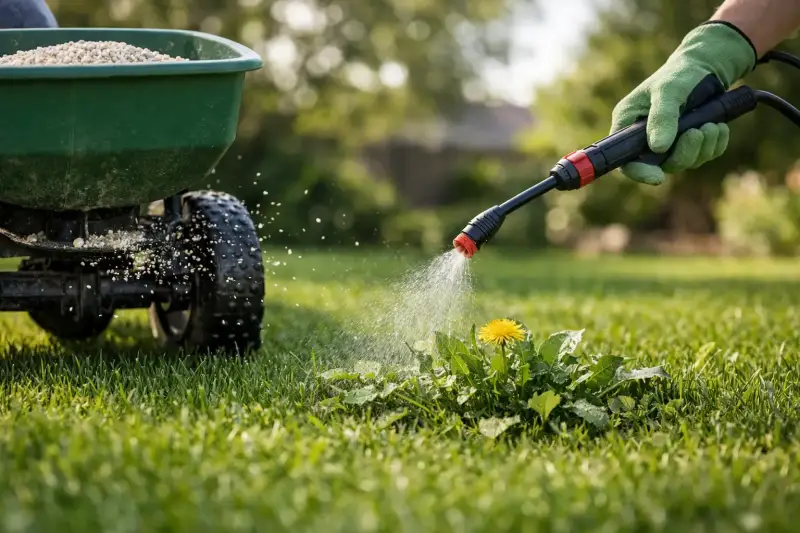
A lawn can be neatly mown every week and still look tired, thin and patchy. Pale grass, broad-leaved weeds and bare areas soon take the edge off an otherwise well-kept garden. Effective **lawn fertilising and weed control** deals with the causes behind that decline, helping the grass grow densely enough to look pristine and naturally resist unwanted plants.
For busy households, this is not simply about achieving a brighter green lawn. A healthy, cared-for lawn makes the whole garden feel cleaner and more welcoming, whether it frames a patio for summer entertaining, gives children space to play or improves the first impression of a home. The right treatment programme saves repeated effort later in the season and protects the time you would rather spend enjoying your garden.
## Why lawns lose their colour and strength
Grass is a hungry plant. Each time it is cut, it uses energy to replace the leaf growth that has been removed. Over time, rainfall washes nutrients down through the soil, while foot traffic, pets, summer heat and periods of heavy rain can all put further pressure on the turf.
Without enough nutrition, grass grows more slowly and loses its rich colour. It also becomes less competitive. This is when weeds find the gaps they need to establish themselves. Daisies, dandelions, clover, plantain and creeping buttercup may each look different, but they thrive for much the same reason: there is space, light and limited competition from healthy grass.
It is tempting to treat the visible problem alone. Applying weed treatment to a weak lawn may clear some unwanted plants, but the gaps they leave behind can quickly be filled by new weeds if the grass is not encouraged to recover. Equally, feeding a lawn without addressing established weeds can result in a greener lawn that still looks untidy. The best results come from treating the lawn as a complete living surface.
## Lawn fertilising and weed control: the balanced approach
A professional lawn treatment plan brings feeding and selective weed management together, while taking account of the season, the condition of the turf and how the space is used. There is no single product or timetable that suits every garden.
Spring treatment is generally focused on waking the lawn up after winter. A suitable fertiliser supports fresh growth and colour as temperatures rise, while selective weed control can target weeds before they have the chance to spread. Where the lawn has suffered from waterlogging, shade or winter wear, it may need patience rather than an overly strong feed.
During summer, the priority often shifts towards maintaining colour and vigour without forcing rapid, thirsty growth. This matters in Dorset, Somerset, Devon and Cornwall, where coastal exposure, dry spells and varied soil conditions can affect lawns very differently from one property to the next. A lawn in a sheltered town garden may need a different approach to one exposed to wind and salt-laden air near the coast.
Autumn feeding helps grass strengthen its roots and prepare for winter. This is also an excellent time to assess compacted or thin areas. Feeding alone cannot fix every issue, particularly where soil is compressed, drainage is poor or moss is taking hold, but it forms an essential part of a wider recovery plan.
### Selective treatment protects the grass
Weed control for lawns should be selective. The aim is to manage broad-leaved weeds while preserving the grass, rather than using a general weedkiller that damages everything it touches. Correct identification matters, as does applying treatment in suitable weather.
Treatments are less effective when grass is stressed by drought, when heavy rain is imminent or when temperatures are too low for active growth. Mowing immediately before or after application can also reduce the treatment's effectiveness because there is less leaf surface for the product to work through. These small details make a noticeable difference to the final result.
A careful approach is particularly valuable in family gardens. Lawns may be used by children, pets and visitors, so treatment instructions and sensible aftercare should always be clear. Professional care means applying products responsibly, in the right quantity and at the right time, rather than relying on a quick, indiscriminate fix.
## What a healthier lawn changes
The visual improvement is usually the first thing homeowners notice. Grass becomes more even in colour, grows with greater density and creates a sharper contrast against borders, paths and patios. A lawn that looks properly maintained can make planting schemes feel more intentional and can lift the appearance of the entire property.
There are practical gains too. Dense turf is better at shading the soil, which helps limit weed germination. Stronger roots are more capable of handling ordinary use, and a lawn with fewer bare patches is easier to mow neatly. It will not become indestructible - regular football, a paddling pool left in one place or persistent dog wear can still cause damage - but a well-fed lawn has a far better chance of recovering.
This is why recurring treatment often produces more satisfying results than a one-off application. A single visit can give a lawn a useful boost, especially before a garden gathering or property sale. However, seasonal care allows treatments to respond to changing conditions and prevents small issues from becoming a larger restoration project.
## Good mowing and aftercare make treatments work harder
Fertiliser and weed treatment are most effective when they sit within sensible garden maintenance. The grass needs time to take up nutrients, and the soil needs enough moisture for growth to continue. If conditions are very dry, watering may be necessary, subject to any local restrictions. In prolonged wet weather, avoiding unnecessary foot traffic helps prevent further compaction.
Mowing height is another common source of trouble. Cutting grass too short may look tidy for a few days, but it weakens the plant and exposes the soil to more light. That creates ideal conditions for weeds and can leave the lawn looking scorched during dry periods. Keeping the blades sharp and removing only a modest amount of growth at each cut supports a fuller, more resilient finish.
For most lawns, grass clippings can be collected when appearance is the priority or when growth is heavy. Fine clippings may be left on the lawn in dry, healthy conditions, but only if they are not forming clumps that block light and air. The right choice depends on the lawn's current condition and the standard of finish you want.
## When the problem is more than weeds
Not every patchy lawn needs more feed. Moss, for example, often points to shade, compacted ground, poor drainage or close mowing. Repeatedly treating moss without tackling these underlying conditions is unlikely to create a lasting change.
Similarly, thin grass beneath mature trees may be affected by shade and competition from tree roots. In these areas, reducing expectations can be wiser than repeatedly forcing lawn growth. A shade-tolerant planting scheme, bark surface or a carefully designed border may create a more attractive and practical result than struggling to maintain grass where it cannot thrive.
Bare areas caused by heavy use, construction work or an overgrown garden clearance may need seed, turf repair, aeration or levelling before regular feeding can do its best work. This is where a thorough assessment is valuable. It prevents money being spent on treatments that are only addressing the surface symptom.
## A professional standard, without losing your weekends
Consistent lawn care takes more than remembering to spread feed when the weather turns warm. It involves choosing suitable treatments, watching the forecast, understanding the condition of the turf and carrying out the work cleanly and carefully. For homeowners managing work, family life or a larger garden, that is time and physical effort that can quickly add up.
Garden Kingpin provides lawn treatments as part of dependable [garden maintenance](https://www.garden-kingpin.co.uk/our-services), helping homeowners maintain a clean, healthy outdoor space without the uncertainty of trial and error. The aim is not an artificially perfect lawn for a fortnight. It is a stronger, neater surface that improves the garden season after season.
If your grass is losing colour, weeds are spreading or the lawn simply no longer matches the standard of the rest of your home, start with an honest assessment of what is happening beneath the surface. The right lawn fertilising and weed control plan can turn a neglected-looking patch of grass into a space you are pleased to see every time you step outside.
Add comment
Comments