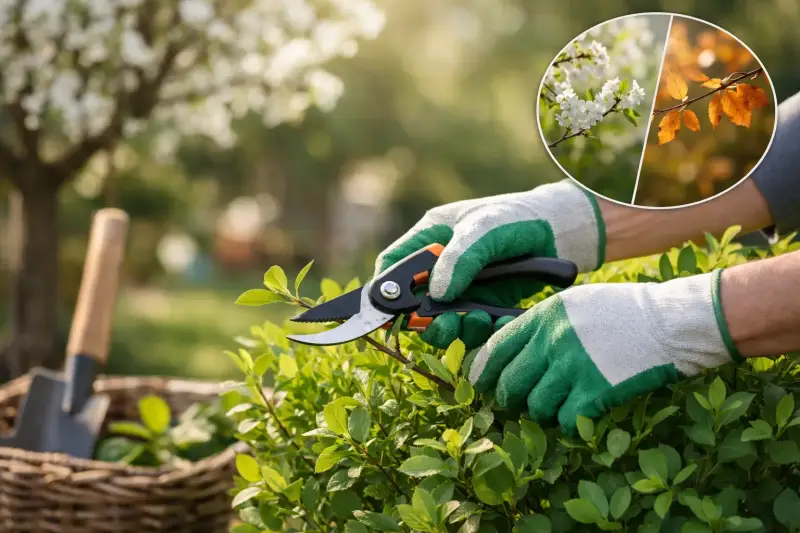
A shrub that has been cut at the wrong moment can spend a whole season looking sparse, lose its flowers, or respond with a tangle of weak new shoots. The **best time to prune shrubs** depends less on the calendar date than on when that particular shrub flowers, how fast it grows and what result you want from it. Get the timing right and your borders, beds and boundaries stay neat, healthy and full of colour without losing their natural shape.
For [busy homeowners](https://www.garden-kingpin.co.uk/blogging/3306041_garden-maintenance-for-busy-professionals), this is one of those jobs that can quickly turn from a light tidy-up into a demanding weekend task. A considered pruning routine keeps shrubs under control before they overwhelm paths, windows, lawns and neighbouring plants.
## Why pruning timing matters
Pruning is not simply about making a shrub smaller. Done well, it removes dead, damaged and congested growth, improves airflow through the plant and encourages strong new stems. It can also bring better flowering, fresher foliage and a more balanced shape.
Done badly, however, it can remove the buds that would have produced this year’s display. This is particularly frustrating with flowering shrubs such as forsythia, weigela and many hydrangeas. Cutting them back hard at the wrong time may leave a tidy-looking plant, but little or no colour when summer arrives.
The aim is to work with the shrub’s growth cycle. Some make flowers on stems produced the previous year, while others flower on new stems grown during the current season. That difference is the key to deciding when the secateurs should come out.
## The best time to prune shrubs by flowering season
### Spring-flowering shrubs: prune after flowering
Shrubs that flower early in the year usually set their flower buds during the previous summer. That means pruning them in late winter or early spring often removes the very stems that are about to bloom.
Forsythia, flowering currant, deutzia, mock orange, weigela and many varieties of lilac are best pruned shortly after their flowers fade. This gives them the rest of the growing season to make new growth and form buds for next spring.
Start by taking out the oldest, woodiest stems close to ground level. Then shorten a few of the remaining flowered stems to a strong side shoot. Avoid shearing the outside into a tight ball unless it is being grown as a formal feature. Most flowering shrubs look healthier and more generous when their natural form is retained.
### Summer-flowering shrubs: prune in late winter or early spring
Many summer-flowering shrubs produce blooms on fresh growth. These are generally the most straightforward plants to prune, because a late-winter or early-spring cut encourages vigorous new stems that will flower later in the year.
Buddleia, hardy fuchsia, potentilla and many spiraeas fall into this group. Once the worst winter weather has passed, cut out dead wood and reduce the previous year’s growth. Buddleia, in particular, benefits from a firm annual prune to stop it becoming tall, bare and top-heavy.
Leave enough healthy framework for the plant to recover well. A very [old or neglected shrub](https://www.garden-kingpin.co.uk/blogging/3306059_overgrown-garden-clearance-service-explained) may need renovation over two or three years rather than one drastic cut, especially if it is under stress from drought, poor soil or deep shade.
### Evergreen shrubs: light pruning in spring or summer
Evergreens do not follow one simple rule, but most respond best to gentle shaping from mid-spring into summer. Box, euonymus, choisya, laurel and pittosporum should usually be trimmed after the risk of severe frost has passed and when they are actively growing.
Avoid cutting tender evergreens hard in autumn. New shoots may appear before winter, then suffer damage from cold winds and frost. In exposed gardens across Dorset, Devon and Somerset, this is especially worth bearing in mind. A little patience in autumn is often better than encouraging soft growth that will not survive the season.
### Hydrangeas: identify the type first
Hydrangeas are a common source of pruning mistakes because different varieties need different treatment. Mophead and lacecap hydrangeas generally flower on older wood, so remove only faded flowerheads and dead or weak stems in spring. The old heads offer a small degree of protection to developing buds over winter.
Panicle hydrangeas and smooth hydrangeas, such as Hydrangea paniculata and Hydrangea arborescens, flower on new growth. These can be cut back more confidently in late winter or early spring to promote strong flowering stems.
If you are unsure which hydrangea you have, resist the urge to cut it hard in autumn. Waiting until spring makes it easier to see what has survived and where healthy buds are forming.
## When not to prune shrubs
There are times when leaving a shrub alone is the better decision. Avoid pruning during very hard frost, prolonged drought or extreme heat. A plant already coping with difficult conditions has less energy to put into recovery.
Autumn is also not the ideal time for major pruning of most shrubs. A light removal of dead, broken or diseased material is sensible, but hard cuts can prompt vulnerable new growth just as cold weather approaches. Autumn pruning can also strip away berries, seedheads and shelter that are valuable to garden wildlife.
Before starting any work, inspect the shrub carefully for nesting birds and other wildlife. Do not disturb an active nest. Dense shrubs and hedges often provide cover that is not immediately visible from the outside, so a thorough check is essential.
## How to prune without spoiling the shape
The cleanest-looking gardens are not created by cutting every plant to the same outline. Good pruning is selective. It opens up the centre of a shrub, removes growth that is crossing or rubbing, and reduces size where it has become intrusive.
Use sharp, clean secateurs for stems up to finger thickness and loppers for heavier branches. Make cuts just above a healthy outward-facing bud where possible. This directs new growth away from the centre instead of creating a crowded mass of stems.
For a shrub that has become too large, do not automatically reduce every branch by the same amount. Remove one or two of the oldest stems entirely, then shorten selected remaining stems. This approach, often called thinning, keeps the shrub looking natural and prevents the blunt, clipped finish that can make a border look harsh.
Clear all cuttings from around the base once the job is done. This improves the overall finish and reduces the chance of disease being left among fallen leaves and stems. A layer of mulch around, but not touching, the stems can help conserve moisture and support recovery through the growing season.
## A simple year-round pruning routine
Late winter is the main season for pruning shrubs that flower on new wood, removing winter damage and bringing overgrown summer-flowering plants back into proportion. Spring is the time to assess tender evergreen shrubs and lightly shape them once new growth begins.
After spring-flowering shrubs finish their display, prune them promptly so they have plenty of time to form next year’s buds. Through summer, deadhead where useful and carry out only light shaping. In autumn, focus on [clearing damaged material](https://www.garden-kingpin.co.uk/blogging/3305998_seasonal-garden-tidy-up-what-your-garden-needs), fallen leaves and diseased growth rather than giving shrubs a severe cut-back.
This routine will not suit every plant perfectly, but it gives most gardens a reliable structure. Labels, photographs and a simple note of when each shrub flowers can be remarkably useful, particularly in a garden with mixed borders.
## When professional shrub care is worthwhile
Large, mature or badly overgrown shrubs need more than a quick trim. They may be hiding structural problems, disease, dead wood or roots competing heavily with nearby plants. Tall shrubs also bring safety concerns, especially where they are close to fences, garages, conservatories or overhead services.
Professional care is useful when you want boundaries and beds brought back to a pristine standard without sacrificing the plants that make the garden feel established. Garden Kingpin can assess what should be retained, reshaped, reduced or replaced, then leave the space clean and ready to enjoy.
The best result is rarely the fastest cut. Give each shrub the care its flowering habit and position require, and it will reward you with healthier growth, clearer borders and a garden that looks properly looked after in every season.
Add comment
Comments