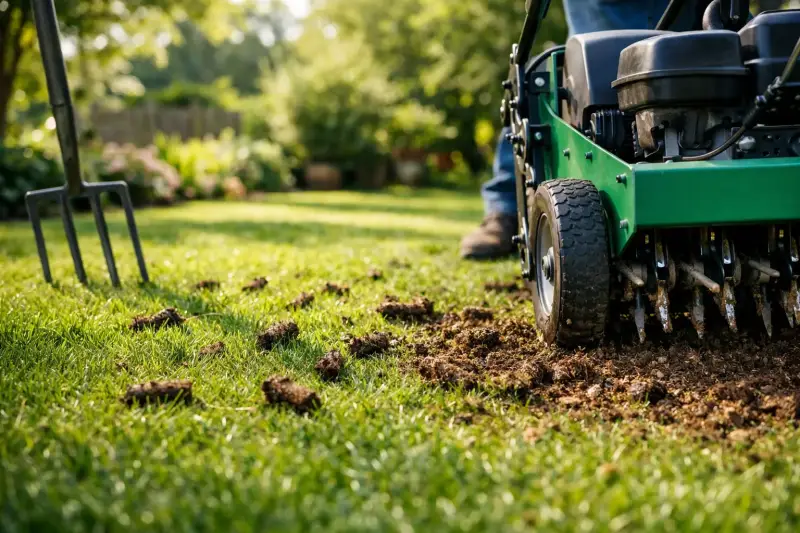
A lawn can look tidy on the surface yet struggle beneath your feet. If rain sits in puddles, grass wears thin along busy routes or the ground feels hard and bouncy, the soil may be compacted. Knowing **when to aerate a lawn** gives grass roots the air, water and nutrients they need to recover, helping create the thick, pristine finish that makes a garden feel properly cared for.
Aeration is not a treatment to carry out simply because the calendar says so. The best timing depends on soil condition, weather and how actively the lawn is growing. Get those right and the lawn can respond quickly. Do it during drought, frost or waterlogged conditions, and you may create more work without improving the result.
## When to aerate a lawn in the UK
For most lawns in Dorset, Somerset, Devon and Cornwall, early autumn is the best time to aerate. September and October usually bring mild temperatures, softer ground and enough moisture for the lawn to recover. Grass is still growing, while the stress of high summer heat has passed. The open holes left by aeration can settle naturally as roots spread into the improved soil.
Spring is also a good option, particularly from April to May once the lawn has started growing strongly and the risk of hard frost is low. Spring aeration can be particularly useful where a garden has suffered from winter compaction, poor drainage or heavy use by children and pets. It gives the lawn a useful lift before the main growing season.
Autumn is generally the stronger choice for heavily compacted lawns because it pairs well with renovation work. Aerating, overseeding and applying an appropriate [autumn feed](https://www.garden-kingpin.co.uk/blogging/3306053_lawn-fertilising-and-weed-control-that-works) can improve a tired lawn far more effectively than any one treatment on its own.
### Aerate when the soil is moist, not soaked
The ideal lawn soil is slightly damp and easy to work, rather than dry as concrete or saturated with water. After a little rainfall, or following a light watering in dry weather, a hollow-tine aerator can remove plugs cleanly. If the soil is waterlogged, the machine may smear and compress the sides of each hole, reducing the benefit.
Avoid aerating during a prolonged dry spell. Grass is already under pressure when water is scarce, and pulling out soil cores can cause further stress. Wait until rain has softened the ground and the lawn has begun to regain some colour.
### Times to avoid
Do not aerate frozen turf, snow-covered ground or a lawn that is persistently boggy. It is also wise to avoid the hottest part of summer, when grass growth slows and newly disturbed soil can dry out rapidly.
If your lawn is full of weeds, moss or bare patches, aeration may still be part of the answer, but it should be planned alongside the right follow-up work. Compaction is rarely the only reason a lawn has deteriorated.
## Signs your lawn needs aerating
You do not need to guess whether aeration is worthwhile. A few clear signs point to soil that is struggling to breathe.
Water that pools on the lawn after rain is one of the most obvious. Healthy soil should absorb water gradually. When the surface has been compacted by foot traffic, mowing, pets or repeated wet weather, rain is more likely to run off or sit in shallow puddles.
Thin grass is another clue, especially where people walk regularly from the patio to the shed, washing line or gate. Roots cannot push through dense soil easily, so grass becomes shallow-rooted and vulnerable to wear. You may also notice that the lawn dries out quickly in warm weather despite regular watering, as water cannot penetrate evenly.
A simple test is to push a screwdriver or garden fork into the ground. If it takes real force to get it a few centimetres into the soil, aeration is likely to help. Lawns on clay soils, common in many parts of the South West, often benefit most because clay compacts readily and drains slowly.
## Core aeration or spike aeration?
There are two main approaches, and choosing the right one matters. Spike aeration makes holes in the soil using solid tines, a garden fork or spiked footwear. It can be useful for light surface compaction and small lawn areas, especially as a quick seasonal job.
Core aeration, also called hollow-tine aeration, removes small plugs of soil from the lawn. This creates lasting channels for air, moisture and roots, while relieving compaction rather than simply pushing soil sideways. For a lawn that feels hard, drains poorly or has become thin and patchy, hollow-tine aeration is usually the more effective treatment.
The soil plugs can be left on the lawn to break down naturally. They may look untidy for a short time, but rain, mowing and natural soil activity return them to the surface. For homeowners who want a cleaner finish straight away, a professional lawn treatment can combine aeration with careful clearing, top dressing and overseeding where needed.
## How often should you aerate?
A well-kept lawn with light use may only need aerating every two or three years. However, annual aeration is often worthwhile for lawns with heavy clay soil, regular footfall, poor drainage or active family use.
There is no benefit in treating a healthy, free-draining lawn too aggressively. The aim is to improve the growing conditions below the surface, not to disturb the turf unnecessarily. A [lawn care professional](https://www.garden-kingpin.co.uk/our-services) will assess the soil, thatch levels, drainage and overall condition before recommending the right approach.
## Make aeration work harder for your lawn
Aeration opens the door for other lawn treatments, which is why it is such a valuable part of a wider maintenance plan. Once the soil is relieved of compaction, it is better able to receive seed, feed and a light top dressing.
If grass is thin, overseeding after aeration helps introduce fresh growth into worn areas. Use a suitable lawn seed for the amount of sun, shade and use the area receives. Keep the surface consistently moist while new seedlings establish, and avoid heavy foot traffic until the young grass has rooted well.
A light top dressing of sandy loam can help level minor bumps and improve the structure of heavy ground over time. It should be brushed into the aeration holes and worked across the lawn in a thin layer, never piled on thickly enough to smother existing grass.
Feeding should match the season. A spring lawn feed supports green growth, while an autumn product is usually lower in nitrogen and designed to encourage stronger roots ahead of winter. Applying the wrong feed at the wrong time can encourage soft growth that is less prepared for cold, wet conditions.
### Do not forget mowing and aftercare
Mow the lawn shortly before aeration, but do not scalp it. A tidy, moderate cut makes it easier to work on the surface and helps seed or top dressing reach the soil afterwards. Leave the grass a little longer after treatment while it recovers, particularly if you have overseeded.
Keep people, pets and garden furniture off the lawn as much as practical for the first week or two. The surface may look temporarily disrupted, but this is a short-term stage in building a fuller and more resilient lawn.
## A better lawn starts below the surface
Aeration is one of those jobs that is easy to overlook because its best results are not instant. A few weeks later, though, you may see rain draining more freely, stronger colour, thicker coverage and less wear around the parts of the garden you use most.
For a lawn that has become compacted, patchy or difficult to manage, the right treatment at the right time can restore the foundations of healthy growth. Garden Kingpin can assess the condition of your lawn and provide the uncompromising care needed to bring it back to a clean, healthy and welcoming finish.
Add comment
Comments