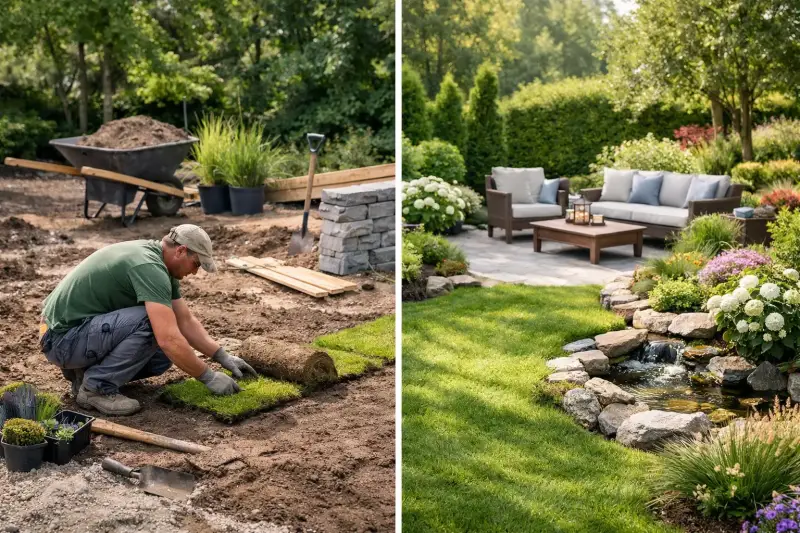
An overgrown lawn, tired paving and a hedge that has claimed half the path can make a garden feel like another job waiting to be done. A **complete garden makeover cost** depends on far more than the garden’s size: the condition of the site, the materials you choose and how you want to use the finished space all matter.
For some homes, a makeover means clearing years of growth, laying a new lawn and creating a clean seating area. For others, it means reshaping levels, improving drainage, replacing boundaries and building a garden designed for family life, entertaining or peaceful evenings outside. The most useful starting point is to understand where the budget goes, then decide which improvements will make the biggest difference to your home and daily life.
## What does a complete garden makeover cost?
As a broad guide, a modest garden refresh may cost from around £3,000 to £8,000. This could include clearance, lawn preparation, straightforward planting, a small patio repair or replacement, and tidying existing borders and boundaries.
A more substantial transformation commonly falls between £8,000 and £20,000. At this level, homeowners may be replacing paving, installing new fencing, laying turf, creating planting schemes and resolving practical issues such as uneven ground or poor access. A full bespoke landscape with extensive hard landscaping, retaining work, premium materials, lighting, drainage or built features can range from £20,000 to £50,000 or more.
These figures are useful for early planning, not a substitute for a site visit. Two gardens with the same measurements can require very different amounts of work. A clear, level plot with good side access is a different proposition from a steep, neglected garden where every material must be carried through the house.
### Typical costs within a garden transformation
The first portion of the budget is often spent on work that is less visible once the garden is complete. Clearance, waste removal, excavation, groundwork and levelling are essential to a lasting result, particularly where a garden has been neglected for several seasons. Depending on the volume of material and access, this can cost from several hundred pounds to several thousand.
Hard landscaping is usually the largest visible investment. A professionally installed patio may range from roughly £100 to £180 per square metre, depending on the paving selected, preparation needed and pattern or edging detail. Natural stone and porcelain tend to cost more than basic concrete products, but can provide a more refined finish and stronger long-term appeal when installed correctly.
A new lawn is generally less expensive per square metre, although preparation is the crucial part. Allow roughly £20 to £40 per square metre for a properly prepared and laid turf lawn, with costs varying according to soil improvement, removal of old turf and the condition of the ground. Seeding can reduce the initial outlay, but it needs more patience and careful aftercare before it becomes a full, usable lawn.
Fencing, planting and finishing details can alter the final figure quickly. New fencing may cost around £100 to £200 or more per metre fitted, depending on height, style, posts and ground conditions. Planting budgets can be modest for young, simple schemes or substantial where mature specimen plants, hedging and instant screening are required.
## The factors that shape garden makeover costs
### The garden’s current condition
A garden that is already clear, accessible and broadly level gives your budget more room for the features you will enjoy every day. By contrast, [dense brambles](https://www.garden-kingpin.co.uk/blogging/3306059_overgrown-garden-clearance-service-explained), failed sheds, broken concrete, old tree stumps and compacted ground all require labour, machinery and responsible disposal before the transformation can begin.
It can be tempting to see clearance as an area to cut back on, but thorough preparation prevents problems later. A pristine lawn will struggle if it is laid over poor ground, and new paving can move or sink if the base beneath it has not been installed properly.
### Ground levels, drainage and access
Waterlogged lawns, standing water on patios and slopes that are difficult to use should be addressed at the start of the project. Drainage channels, soakaways, retaining features and soil management increase the initial cost, but they protect the garden from becoming difficult to maintain after heavy rain.
Access has a practical effect too. If machinery can reach the garden directly, excavation and moving materials are usually more efficient. Restricted access, narrow gates, steps and terraced properties can mean more manual labour and additional time on site.
### Materials and the standard of finish
There is no single right choice between budget-friendly paving and premium stone, or between a simple timber boundary and a more decorative screen. It depends on how long you expect the feature to last, how much maintenance you are happy to take on and the character of your property.
A well-chosen material in a simple layout is often better value than an ambitious design compromised by shortcuts. Spending wisely on foundations, edging, drainage and installation protects the finish you see above ground.
### How you want to live in the garden
The best garden makeovers are built around real routines. A family may need a durable lawn, clear sightlines and a patio large enough for outdoor meals. [A busy professional](https://www.garden-kingpin.co.uk/blogging/3306041_garden-maintenance-for-busy-professionals) may prefer low-maintenance planting, tidy boundaries and a seating area that is ready to enjoy without taking up every weekend. An older homeowner may prioritise safer routes, manageable borders and a garden that remains attractive with less physical effort.
Those choices influence the amount of paving, planting, lawn and ongoing care required. They also help avoid paying for features that look impressive on paper but do not suit the way you use your outdoor space.
## Setting a realistic budget for a complete garden makeover
Begin with a clear maximum budget, then separate the non-negotiables from the desirable extras. Resolving drainage, replacing unsafe fencing and creating a practical route from the house are often priorities. Decorative lighting, water features, pergolas and more mature planting can then be considered once the core work is properly funded.
It is sensible to hold back a contingency of around 10 to 15 per cent, especially for older or overgrown gardens. Hidden concrete, damaged drains, poor soil and unexpected root systems are not always apparent until work begins. A sensible allowance means the project can be completed to the expected standard rather than paused halfway through.
Phasing can also be a good option. For example, clearance, groundwork, fencing and the main patio might be completed first, followed by planting, lawn improvements and finishing touches at a later date. This works well when the garden needs immediate practical attention, but the full wish list exceeds the current budget. The key is to plan the whole layout from the outset, so later work does not undo or duplicate what has already been done.
## Where your investment usually has the greatest impact
If the budget cannot cover everything at once, focus first on the elements that make the garden functional and easy to keep tidy. Secure boundaries, sound drainage, level surfaces and a healthy lawn create the foundation for every later improvement.
A well-proportioned patio can transform how often a garden is used, while thoughtful planting softens new hard surfaces and gives the space character through the seasons. Mature shrubs worth keeping should be assessed carefully. Retaining healthy established plants can save money, provide instant structure and prevent a new garden from feeling bare.
Avoid choosing solely on the lowest headline price. Landscaping is not just the finished patio or lawn - it is the preparation beneath it, the cleanliness of the site throughout the work and the care taken with every edge, joint and border. A detailed quotation should make clear what is included for labour, materials, waste removal, groundwork and any allowances for unknown conditions.
## Getting a quote that gives you confidence
A proper quotation starts with a conversation about the garden you want, followed by an assessment of the site. This is the time to discuss access, drainage concerns, materials, maintenance expectations and whether the work should be completed in phases.
Ask for the proposed scope to be clear rather than relying on a single total. You should understand what will be cleared, what surfaces will be installed, how waste will be handled and whether planting, turf, soil or finishing work is included. Clear expectations make it easier to compare options fairly and protect the quality of the final result.
For homeowners across Dorset, Somerset, Devon and Cornwall, Garden Kingpin provides [free quotations](https://www.garden-kingpin.co.uk/free-quote) for gardens that need anything from a considered refresh to a complete transformation. The aim is not simply to make an outdoor space look better for a week, but to create a clean, healthy and stunning landscape that feels like a natural extension of the home.
The right budget is the one that solves the problems you face now and leaves you with a garden you genuinely want to step into. Start with the groundwork, choose finishes that suit your life, and let every pound work towards a space that remains a pleasure to use and maintain.
Add comment
Comments