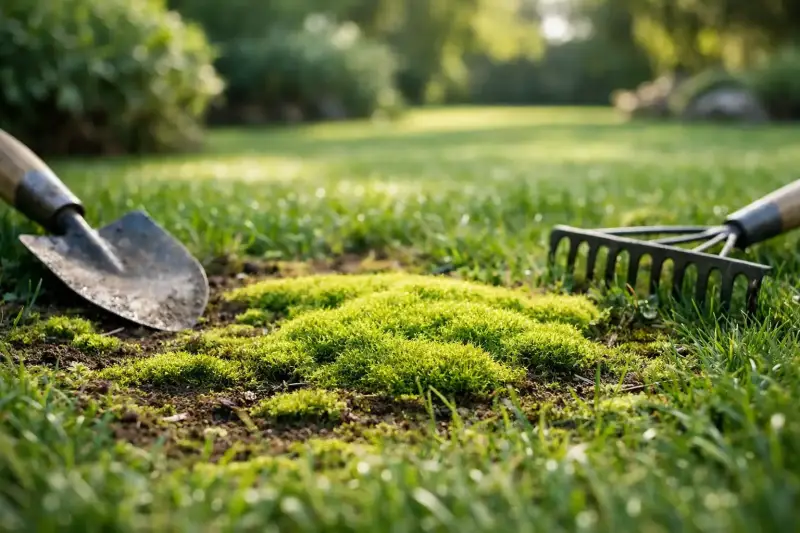
A lawn can look perfectly acceptable through summer, then reveal broad, velvety patches of moss after a wet Dorset winter. If you are asking what causes moss in lawns, the answer is rarely a single mistake. Moss takes hold when grass is struggling and the ground offers the damp, still conditions it prefers.
It is a useful warning sign rather than simply a nuisance. Removing moss without correcting the reason it arrived may improve the appearance for a short while, but it often returns the following autumn. The lasting solution is to make the lawn a better place for grass to grow.
## What Causes Moss in Lawns?
Moss spreads where turf is thin, weak or unable to compete. It does not have deep roots like grass and can grow in conditions that most lawn grasses find difficult, including compacted soil, low light and persistent moisture. Spores can arrive by wind, wildlife, footwear or garden tools, but spores alone do not create a moss problem. The condition of the lawn is what decides whether they establish.
In the South West, regular rainfall, heavy soils and sheltered gardens can create ideal conditions for moss for long periods of the year. A lawn under mature trees, beside a high fence or on the north side of a house may dry slowly even when the rest of the garden appears fine.
### Shade and poor air movement
Grass needs sufficient light to produce strong, dense growth. Moss is far more tolerant of shade, so it gains ground under trees, beside hedges and in narrow areas between buildings. Overhanging branches can also reduce airflow, allowing dew and rainwater to remain on the surface for longer.
Some shade is unavoidable, particularly in established gardens. The sensible approach may be to thin a dense canopy where appropriate, raise the lower branches of trees and select a shade-tolerant grass mix when reseeding. In very dark, damp corners, forcing a traditional lawn to survive can become an annual battle. A planted bed, bark area or carefully designed hard-landscaped feature may be a more attractive and lower-maintenance option.
### Compacted soil
Compaction is one of the most common causes of recurring moss. Repeated foot traffic, children playing, pets, mowing when the ground is wet and naturally heavy clay soil all press soil particles together. This reduces the tiny air spaces that grass roots need for water, oxygen and nutrients.
When water cannot move through the soil easily, it sits close to the surface. Grass roots become shallow and weak, while moss thrives. You may notice that moss is particularly heavy along a route to the shed, beneath a washing line, around a gate or where a mower turns repeatedly.
Aeration relieves this pressure by creating channels in the ground. On a small lawn, a garden fork can help when pushed deeply into the soil at regular intervals. Larger lawns and heavily compacted areas usually benefit from professional hollow-tine aeration, which removes small plugs of soil and provides a more meaningful improvement.
### Poor drainage and prolonged wetness
A lawn that remains soft, puddled or slippery after rainfall is likely to develop moss. Drainage problems can be caused by compacted ground, clay subsoil, an uneven surface, excessive thatch or water running from paths, roofs and borders towards the lawn.
Before adding treatments, look at how water behaves after a shower. Does it collect in one hollow? Does a downpipe discharge nearby? Has a raised patio altered the way water flows? Levelling a low area, improving surface drainage or redirecting water can make more difference than repeated moss killing products.
It is also worth avoiding unnecessary watering. A well-established lawn does not need to be kept constantly damp in typical British weather. Water deeply during genuinely dry spells if needed, rather than applying frequent light watering that encourages shallow grass roots.
### Thin grass and low fertility
Healthy grass competes by covering the soil with dense leaf growth and a strong root system. Where the lawn has been underfed, worn out or damaged by drought, pests or disease, bare gaps appear. Moss quickly occupies those gaps.
Low fertility is not always obvious. A lawn may still look green in spring but lack the strength to withstand summer wear or winter wet. Applying the [right seasonal feed](https://www.garden-kingpin.co.uk/blogging/3306053_lawn-fertilising-and-weed-control-that-works) encourages grass to recover and thicken, but timing matters. A high-nitrogen feed late in the year can produce soft growth that is less able to cope with cold, damp conditions. Autumn feeds are generally formulated to support roots and overall resilience instead.
### Excess thatch
Thatch is a layer of dead grass stems, roots and organic debris that builds up between the green grass and the soil. A small amount is normal, but a thick layer holds moisture at the surface and prevents water, air and nutrients from reaching the root zone efficiently.
If the lawn feels springy underfoot, dries unevenly or produces large amounts of dead material when raked, thatch may be part of the issue. Scarification removes this build-up and can make a tired lawn look rough for a few weeks. That temporary disruption is often worthwhile when followed by overseeding and suitable feeding, as new grass can then fill the exposed areas.
### Acidic soil - sometimes, but not always
Moss is often blamed on acidic soil, and soil acidity can contribute in some gardens. However, moss is not reliable proof that your lawn needs lime. It is more often a sign of shade, wetness or poor turf vigour.
Applying lime without a soil test can push the pH too far in the other direction and make it harder for grass to access nutrients. A straightforward soil test gives a far clearer basis for action. If the pH is genuinely low, a suitable lime application may be appropriate, but it should sit alongside drainage, aeration and lawn-care improvements rather than replace them.
## Lawn Care Habits That Encourage Moss
Mowing too low is an easy way to weaken grass. Scalping removes much of the leaf that the plant uses to grow, exposes the soil and leaves the lawn vulnerable during dry, shaded or wet periods. Raise the [cutting height](https://www.garden-kingpin.co.uk/blogging/3311629_lawn-mowing-that-keeps-your-garden-pristine) in shady areas and during autumn, and avoid removing more than roughly one-third of the grass blade in a single cut.
Cutting wet grass is another avoidable problem. It can compact the ground, tear the blades and leave clippings clumped across the surface. Wait until the lawn is reasonably dry, keep mower blades sharp and remove heavy deposits of clippings where they may smother the grass.
Neglect can cause moss, but over-treatment can too. Repeatedly raking an already thin lawn, using strong products without addressing drainage, or applying too much fertiliser can leave turf stressed. Good lawn care is a sequence of measured improvements, not a single aggressive treatment.
## How to Deal With Moss and Restore the Lawn
The most effective order of work depends on the condition of the garden, but the principle is consistent: deal with the cause first, then help grass reclaim the space. If moss is widespread, it is often best to plan the work for the appropriate season rather than stripping everything out during the coldest, wettest part of winter.
Start by identifying the dominant problem. Is the lawn shaded, waterlogged, compacted, thin or simply covered in thatch? Many gardens have two or three contributing factors. Once you understand that, treatment becomes more purposeful.
Where conditions allow, moss can be treated and removed by scarifying or raking. The lawn should then be aerated if compacted, top-dressed where the surface and soil structure need improving, and overseeded with a mix suited to the amount of sun it receives. Keep newly sown areas evenly moist until established, but do not turn them into saturated ground.
For an uneven, heavily mossed or neglected lawn, renovation may be better value than repeatedly patching small failures. This could involve reshaping the surface, addressing drainage, improving the soil and establishing a fresh lawn that suits how the space is used. The aim is not just a greener photograph for a few weeks, but a clean, durable lawn that stands up to family life, entertaining and everyday use.
## When Professional Lawn Care Makes Sense
A small patch of moss in a shaded corner is usually manageable with careful maintenance. Widespread moss, standing water, persistent bare areas or a lawn that has declined over several seasons calls for a more thorough assessment. The underlying issue may be below the surface, and guessing can waste time, effort and money on treatments that do not last.
Garden Kingpin can assess the condition of the lawn as part of a wider garden-care plan, from seasonal scarification and aeration to drainage improvements, reseeding and complete lawn restoration. This is particularly helpful when an [overgrown garden](https://www.garden-kingpin.co.uk/blogging/3306059_overgrown-garden-clearance-service-explained) needs bringing back under control without adding another demanding weekend job to the household list.
A moss-free lawn is not created by chasing every green patch with a rake. Give grass the light, airflow, drainage and care it needs, and it has every chance to become the pristine, resilient backdrop your garden deserves.
Add comment
Comments