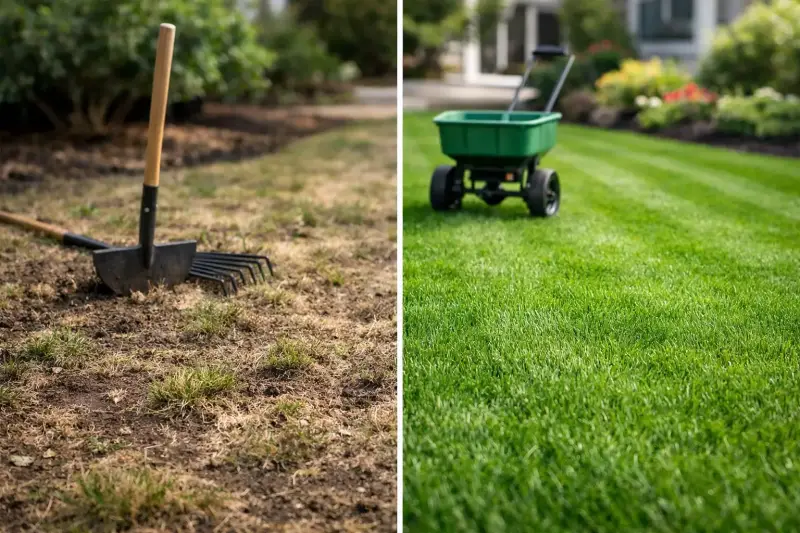
A tired lawn rarely becomes patchy, thin or moss-covered overnight. It is usually the visible result of compacted soil, shade, poor drainage, heavy use, drought, pests or years of rushed mowing. The most satisfying lawn restoration before and after results come from addressing those underlying issues, rather than simply scattering seed over a problem area and hoping for the best.
For homeowners, a restored lawn changes more than the view from the kitchen. It creates a cleaner, more welcoming setting for children to play, summer meals outside and everyday enjoyment of the garden. It can also sharpen the appearance of paths, borders, hedges and the property itself.
## What a Lawn Looks Like Before Restoration
Before restoration, the signs are often easy to spot: bare or yellowing patches, broadleaf weeds, moss, uneven colour and grass that feels thin beneath your feet. In more neglected gardens, the lawn may have become bumpy, waterlogged or crowded out by thatch - the layer of dead stems and roots sitting around the base of the grass.
These symptoms may look similar, but they do not always have the same cause. A lawn beneath mature trees may struggle because of shade and root competition. A lawn used regularly by children or dogs may be compacted and worn along favourite routes. Heavy Dorset or Somerset clay soils can hold water for longer, while a dry, exposed garden may lose moisture quickly during a hot spell.
This is why an honest assessment matters. A pristine-looking finish is the goal, but the right route to reach it depends on the lawn’s condition, how it is used and what sits beneath the surface.
## Lawn Restoration Before and After: The Work Behind the Change
A strong before-and-after transformation begins with preparation. The first stage is usually to cut back overgrown grass, clear leaves and debris, and remove weeds where needed. This immediately makes the garden feel tidier, but it is only the starting point.
Scarifying may then be used to lift moss and thatch from the lawn. Aeration helps relieve compacted ground by creating channels through which air, water and nutrients can reach the roots. Where the soil is uneven, a suitable dressing can be worked into low areas to improve the surface gradually.
Bare patches need more than seed alone. The area should be raked clear, loosened and levelled so the seed has contact with the soil. Choosing an appropriate seed mix is equally important. A hard-wearing family lawn benefits from a tougher mix than a fine ornamental area, while a shadier garden needs varieties that can cope with less direct sunlight.
For lawns that are badly damaged, heavily weeded or fundamentally uneven, renovation may be more sensible than patch repair. That could mean removing the old turf, reshaping the ground and laying fresh turf or reseeding from scratch. It involves more work and a larger upfront cost, but it can be the better value option where small fixes would only delay a full overhaul.
### The Difference Between Overseeding and Returfing
Overseeding introduces new grass seed into an existing lawn. It is often the most practical choice where there is still a reasonable amount of healthy grass in place. With preparation, consistent watering and the right timing, it can thicken a sparse lawn and improve colour without losing the entire surface.
Returfing delivers the quickest visual change. A well-prepared lawn can look smart almost immediately, which is particularly appealing before a family event, a house sale or a wider garden makeover. However, fresh turf still needs careful aftercare while roots establish, and poor ground preparation can lead to the same problems returning.
Neither option is automatically better. The condition of the lawn, budget, timing and expectations all matter. A professional inspection helps avoid spending money on a surface treatment when drainage, compaction or shade is the real issue.
## What You Can Expect After Lawn Restoration
The immediate after picture is usually much cleaner: crisp edges, a more even surface and clear definition between lawn, beds and paths. But a truly healthy lawn develops over the following weeks and seasons.
New seed needs moisture to germinate, while turf needs regular watering until it has rooted into the soil below. The lawn should be kept off as much as possible at first. Mowing starts only when new grass is established, using a sharp blade and a higher cutting height. Taking too much off in one cut can weaken young grass and expose the soil to weeds.
After several weeks, the difference becomes more convincing. Thin areas begin to fill, the colour becomes more consistent and the lawn is better able to recover from normal use. With the right programme of mowing, feeding, seasonal aeration and weed control, it will continue to improve rather than slipping back into the same cycle of bare patches and moss.
A restored lawn should look natural, not artificially perfect. Small variations in colour can occur through weather, shade and the time of year. What matters is that the grass is dense enough to resist weeds, rooted enough to withstand use and neat enough to complement the rest of the garden.
## Timing Makes a Noticeable Difference
Early autumn is often an excellent time for lawn restoration. The soil remains warm after summer, rainfall is usually more reliable and weeds are less aggressive than in spring. This gives grass seed a good opportunity to establish before winter.
Spring can also work well, especially where a lawn needs attention after a wet winter. The trade-off is that dry spells may arrive before young grass has developed a strong root system, so watering becomes more important. Summer restoration is possible, but it demands closer attention to moisture and is generally less forgiving during heat.
Winter is best used for planning, clearing and addressing major drainage or landscaping work where conditions allow. Seed germination slows in cold soil, so it is rarely the right moment to expect rapid green growth.
## Protecting the Result All Year Round
The best lawn restoration [before and after photographs](https://www.garden-kingpin.co.uk/showcase) show a dramatic change, but the lasting value lies in what happens next. A sensible maintenance routine protects the investment and saves the garden from becoming another demanding project.
Mow regularly during the growing season, but avoid cutting grass too short. Slightly longer grass shades the soil, supports healthier roots and is more tolerant of dry weather. Keep edges trimmed, clear fallen leaves promptly in autumn and avoid walking repeatedly over frosty or waterlogged turf.
Feeding should match the season. Spring and summer feeds encourage steady growth and healthy colour, while an autumn treatment supports roots without forcing soft top growth before colder weather. If moss returns each year, it is worth looking again at shade, drainage and compaction rather than treating moss as an isolated problem.
For busy households, regular professional care makes the difference between a lawn that looks good briefly and one that stays consistently well presented. Garden Kingpin can combine [lawn treatments](https://www.garden-kingpin.co.uk/our-services) with mowing, edging, weeding and seasonal clear-ups, so the whole garden receives the same uncompromising care.
A lawn does not need to be flawless to transform an outdoor space. It needs to be healthy, even and suited to the way your household lives. Start with the reason it has struggled, give it the right groundwork and aftercare, and the greener after picture will have every chance of lasting.
Add comment
Comments