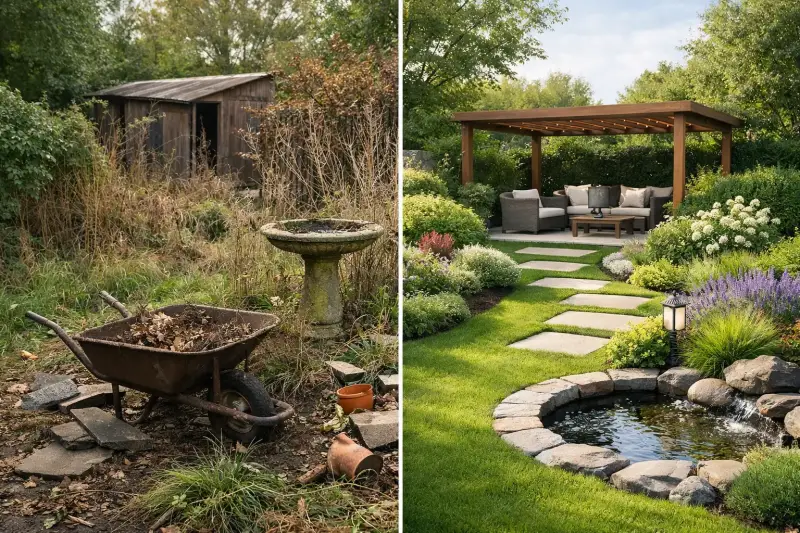
A garden can become difficult to face surprisingly quickly. One missed season of pruning becomes two, weeds take hold in borders, the lawn thins out, and an old patio starts to feel more like a storage area than somewhere to sit. This neglected garden transformation example shows how a tired, overgrown outdoor space can be brought back under control and reshaped into a clean, practical garden that feels like part of the home again.
The aim is not simply to make everything look tidier for a week. A lasting transformation starts by understanding what is worth keeping, what is causing problems and how the garden needs to work for the people who use it. For a busy family, that may mean a usable lawn and a safe seating area. For an older homeowner, it may mean lower-maintenance planting, clearer paths and manageable boundaries. The finished garden should look stunning, but it must also make everyday life easier.
## The starting point: overgrown, uneven and underused
In this example, the garden had been left largely untouched for several years. Mature shrubs had grown across the paths, self-seeded saplings were competing with established plants, and brambles had spread into the rear boundary. The lawn was patchy and compacted, with moss dominating the shadier areas. A small paved area near the house was sound beneath the surface, but hidden by weeds, garden waste and unused pots.
There was potential in the space, but it was concealed by volume. The boundaries were unclear, the garden felt smaller than it was, and there was nowhere comfortable to enjoy a cup of tea, let alone host friends or let children play.
This is a common situation. Neglect does not always mean a garden needs to be completely stripped out and rebuilt. Often, there are useful existing features: a healthy mature tree, solid paving, established evergreen structure or a boundary hedge that can be restored with careful work. Keeping the right elements can protect the character of the garden and make the budget work harder.
## A neglected garden transformation example begins with a clear plan
Before any cutting or digging starts, a proper assessment prevents costly mistakes. The first job is to identify access points, drainage issues, slopes, established plants and any materials that can be retained. It is also worth considering where the sun falls at different times of day, especially when planning seating, lawns and planting.
For this garden, the priorities were clear: reclaim the overgrown boundaries, restore a healthy lawn, create an inviting area close to the house and reduce the amount of ongoing work required. The owners wanted a garden that looked pristine without demanding every weekend.
That led to a simple layout rather than an overcomplicated design. The existing patio was refreshed and extended slightly to make room for a dining set. A central lawn provided open space, while the borders were reduced to a depth that still gave colour and softness without becoming difficult to weed. Along the rear fence, dense, unruly planting was replaced with a more controlled mix of evergreen shrubs and flowering perennials.
A garden plan should always reflect the household. A large lawn may be right for a family with young children, but it can be unnecessary for someone who would rather have generous planting and a sunny terrace. Likewise, gravel can reduce mowing, but it is not always the best choice for homes where mobility, pushchairs or bare feet are a consideration.
## Clearing the space without losing its character
The clearance stage delivered the most immediate visual change. Brambles, dead wood, invasive growth and accumulated debris were removed first, opening up the boundaries and revealing the actual shape of the garden. Overgrown shrubs were selectively pruned rather than automatically removed, giving them a chance to recover while improving light and air circulation.
This distinction matters. Hard pruning can be highly effective, but it is not suitable for every shrub or every time of year. Some plants respond well to renovation pruning, while others need a more gradual approach. An experienced gardening team will know when to cut back firmly, when to lift and thin, and when removal is the better option.
The old paving was then cleared, pressure washed and repointed where necessary. This was a practical decision. Reusing sound materials avoided unnecessary waste and gave the garden an established feel, while the cleaned surface immediately made the area more welcoming.
At this point, the garden already felt bigger and brighter. Yet clearance alone is not a transformation. Without attention to soil, edges, drainage and future maintenance, an overgrown garden can quickly slip back into the same condition.
## Restoring the lawn and preparing the ground
A tired lawn is often the feature that makes a whole garden look neglected, even when the borders are tidy. In this example, the lawn had thin grass, bare areas and a heavy moss problem. The solution was not simply to scatter seed over the surface.
The ground was scarified to remove moss and thatch, then aerated to relieve compaction and help water, air and nutrients reach the roots. Low spots were levelled with suitable top dressing before overseeding. A considered lawn treatment programme helped the new grass establish, while regular mowing at the correct height encouraged thicker, healthier growth.
Soil preparation was equally important in the borders. Once persistent roots and weeds had been removed, the soil was improved with organic matter and shaped to create clean, defined edges. Good edging gives a garden a cared-for appearance, but it also keeps grass out of beds and makes routine maintenance quicker.
Where drainage is poor, the right answer depends on the cause. Compacted soil may improve with aeration and soil conditioning, while standing water around a patio may require changes to levels or drainage channels. These issues are best addressed before new turf, paving or planting goes in.
## Planting for colour, structure and manageable upkeep
The new planting scheme was designed to look good across the year rather than relying on one short burst of summer colour. Evergreen shrubs gave the boundaries shape through winter, while flowering perennials and bulbs brought seasonal interest. The beds were mulched after planting to retain moisture, suppress weeds and give the soil a neat, finished appearance.
The key was choosing plants that suited the conditions. A sunny, free-draining border needs a different approach from a damp, shaded corner beneath established trees. Planting what looks attractive at the garden centre without considering soil and light can lead to disappointing results and repeated replacement costs.
Maintenance was built into the design. Plants were spaced with their mature size in mind, so they would not immediately crowd one another. The owners also chose varieties that could be kept tidy with straightforward seasonal pruning rather than constant intervention. This is where thoughtful landscaping saves time long after the project is finished.
## The finished garden: space to use, not another job to manage
The result was a garden with a clear purpose. From the house, the refreshed patio created an immediate place to sit and entertain. The lawn looked greener and more even, the borders framed rather than swallowed the space, and the restored boundaries made the whole garden feel private and cared for.
More importantly, the owners could see how to use it. Children had room to play, adults had a clean space to relax, and the garden no longer felt like an unfinished task waiting outside the back door. That change in how a space feels is often the real value of a [garden makeover](https://www.garden-kingpin.co.uk/showcase).
A full transformation does involve decisions around budget, timing and scope. Some gardens need new fencing, retaining work or complete hard landscaping, while others can achieve a dramatic improvement through professional clearance, lawn restoration, pruning and targeted planting. The right level of work depends on the condition of the garden and the outcome you want.
## Keeping the transformation looking pristine
Once a neglected garden has been restored, regular care protects the investment. Lawn mowing, edging, weeding, hedge trimming and seasonal clear-ups stop small jobs becoming major work again. Shrubs stay healthier when they are pruned at the right time, and early weed control is far easier than tackling a border that has been left for months.
For households with limited time, a recurring maintenance arrangement can be the difference between a garden that briefly looks good and one that stays consistently impressive. Garden Kingpin provides the practical, [end-to-end care](https://www.garden-kingpin.co.uk/our-services) needed to maintain healthy lawns, tidy boundaries and outdoor spaces that remain ready to enjoy.
A neglected garden does not need to stay off limits. Start by looking past the weeds and overgrowth to the usable space underneath, then choose improvements that will make the garden work better for your home, season after season.
Add comment
Comments