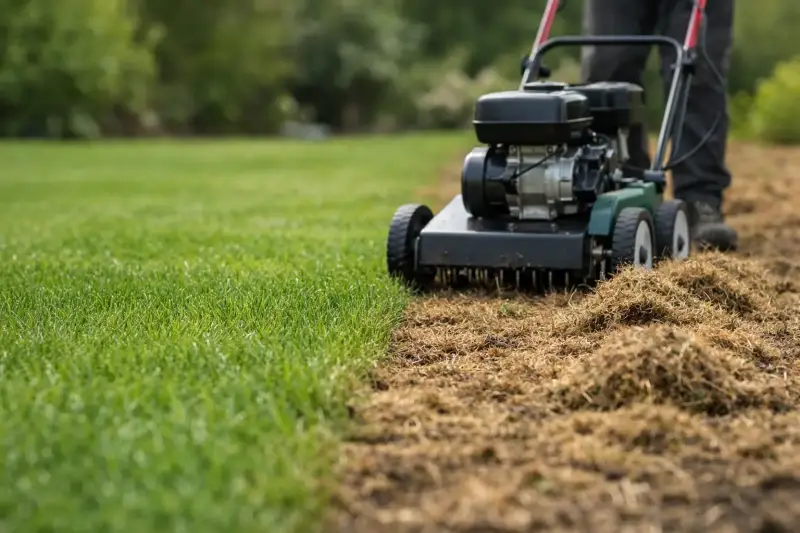
A lawn can look green from the kitchen window yet feel springy, patchy and tired when you walk across it. Often, the problem sits below the visible grass. Lawn scarification removes the built-up layer of thatch, moss and surface debris that can stop air, water and nutrients reaching the roots properly. Done at the right time, it gives a lawn the breathing room it needs to grow back thicker, healthier and more even.
For homeowners who want a pristine garden without losing weekends to demanding lawn work, it is one of the most effective seasonal treatments available. It is not a cosmetic quick fix, though. Scarification can make a lawn look temporarily worse before it looks considerably better, so timing, technique and aftercare matter.
## What lawn scarification actually does
Thatch is a dense layer of dead grass stems, old roots, moss and organic material that collects between the soil and the growing grass. A small amount is normal, but once it becomes too thick it acts like a barrier. Rain may run off rather than soak in, feed may not reach the roots, and the grass can become thin despite regular mowing.
Scarification uses a machine fitted with rotating blades or wire tines to pull this material up from the lawn. It is more thorough than simply raking leaves away. The treatment opens the surface of the turf, removes moss and gives new grass shoots more space to establish.
You will usually see a surprising amount of brown material left on the lawn afterwards. That is exactly what should be removed. A properly scarified lawn may look sparse for a short period, but it is then in a much stronger position to recover with fresh growth.
## Signs your lawn may need scarifying
The clearest sign is a lawn that feels soft or spongy underfoot, particularly when the soil itself is not especially wet. You may also notice moss spreading through the grass, bare patches developing after summer use, or water sitting on the surface after rainfall.
Grass that appears pale, weak or uneven despite being mown and fed can also point to excessive thatch. In established gardens across Dorset, Somerset, Devon and Cornwall, damp weather, shade from mature trees and regular lawn use can all encourage moss and surface build-up.
A simple check can help. Part the grass with your fingers and look at the layer above the soil. If there is a thick, matted layer of brown material rather than healthy green shoots growing directly from the base, scarification may be worthwhile. As a guide, thatch deeper than around 1cm is likely to restrict the lawn’s performance.
That said, not every struggling lawn needs scarifying. If the main issue is compacted soil, poor drainage, deep shade, pet damage or a poor-quality grass surface, scarification alone will not solve it. A professional assessment prevents the wrong treatment from putting extra stress on an already weak lawn.
## The best time for lawn scarification
The best period depends on the lawn’s condition and how severely it needs treating. Light scarification is usually carried out in spring, once the grass is actively growing and the ground has started to dry. Mid to late spring is often suitable, provided there is enough warmth and moisture for recovery.
For heavier work, early autumn is frequently the better choice. The soil is still warm after summer, rain is more reliable, and there is normally less pressure from hot weather and heavy garden use. This gives the grass time to repair before winter.
Avoid scarifying during drought, frosty conditions or when the lawn is waterlogged. It is also wise not to carry out a severe treatment just before a family gathering or garden event. The lawn needs a few weeks of care afterwards, and recovery is never instant.
Cool-season lawns, which are common in British gardens, tend to respond well to spring or autumn work. A lawn that is mostly moss and very thin grass may need a gentler first pass followed by overseeding, rather than an aggressive single treatment.
## How the process should be carried out
Good scarification starts with preparation. The lawn should be mown a little shorter than usual, but not scalped, and leaves, twigs and other loose debris should be cleared first. The soil should be moist enough for the machine to work cleanly, but firm enough not to tear up the turf.
The scarifier is then passed over the lawn in straight, controlled lines. For a light treatment, one pass may be enough. Heavily thatched areas may require a second pass at a different angle, although this should be approached carefully. More passes remove more material, but they also place greater strain on the grass.
All debris should be collected thoroughly once the work is complete. Leaving pulled-out moss and thatch on the lawn defeats the purpose, while tidy clearance also reveals where overseeding or repair is needed.
For larger, sloping or overgrown gardens, machinery choice makes a real difference. A lightweight electric scarifier may be suitable for a small, level lawn, but it can struggle with dense thatch. More powerful equipment, used with the correct depth setting, delivers a cleaner and more consistent finish while reducing the risk of unnecessary damage.
## Aftercare is what creates the result
Scarification prepares a lawn for improvement. The recovery work that follows is what turns a rough-looking surface into a greener, fuller lawn.
Overseeding is often recommended, especially where scarification has exposed thin areas. Fresh seed fills gaps before moss and weeds have the chance to return. The seed should suit the lawn’s use and conditions. A hard-wearing family lawn needs a different mix from a fine ornamental lawn, while shaded areas benefit from more shade-tolerant grass varieties.
A [suitable lawn feed](https://www.garden-kingpin.co.uk/blogging/3306053_lawn-fertilising-and-weed-control-that-works) can support root development, but it should be chosen for the season. Spring treatment generally calls for feed that encourages healthy green growth, while autumn products are usually lower in nitrogen and more focused on root strength. Watering is essential while new seed is germinating, particularly in a dry spell.
Mowing should be kept gentle during recovery. Wait until new grass is established, then [mow on a higher setting](https://www.garden-kingpin.co.uk/blogging/3311629_lawn-mowing-that-keeps-your-garden-pristine) and remove only a small amount of growth at a time. Cutting too low too soon can weaken the new shoots just as they are beginning to fill out.
## Scarification, aeration and moss control are not the same job
These treatments are often grouped together, but each addresses a different problem. Scarification removes thatch and moss from the lawn surface. Aeration creates channels into compacted soil, helping water, air and roots move deeper down. Moss control tackles the moss itself, although the underlying cause still needs attention.
A lawn with poor drainage may benefit from both scarification and aeration. A shaded lawn may need selective pruning around trees or a change to a more shade-tolerant grass mix. If moss returns every year, treating the symptoms without improving light, drainage or mowing habits will only create repeat work.
This is where a joined-up lawn-care plan is valuable. Rather than applying a single treatment in isolation, the right approach considers the lawn’s condition, how the garden is used and what will keep it looking cared for in the months ahead.
## Is professional scarification worth it?
For a small lawn with only light surface thatch, a careful homeowner can achieve a good result with hired or domestic equipment. The trade-off is time, physical effort and the need to judge the machine setting correctly. Set too shallow, the work has little effect. Set too deep, it can strip healthy grass and leave the lawn struggling to recover.
Professional lawn care is particularly useful where the lawn is large, uneven, heavily mossed or part of a wider garden restoration. It brings the right machinery, tidy removal of waste and a clear aftercare plan, whether that means overseeding, feeding, aeration or [ongoing maintenance](https://www.garden-kingpin.co.uk/blogging/3311945_professional-lawn-maintenance-that-lasts). Garden Kingpin approaches scarification as part of the wider condition of your outdoor space, so the result supports a cleaner, stronger and more impressive garden rather than creating another task on the list.
A lawn does not have to be perfect to be enjoyed, but it should be healthy enough to stand up to daily life. When thatch and moss begin to take over, well-timed scarification can give the grass a genuine fresh start and give you more time to enjoy the garden around it.
Add comment
Comments