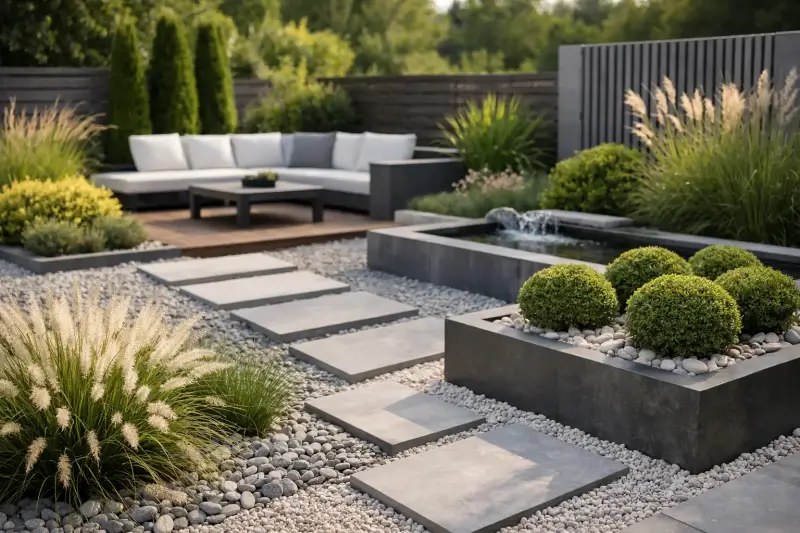
A garden can look immaculate on Saturday morning and feel like another job by the following weekend. The best low maintenance garden ideas are not about making the space bare or lifeless. They are about making sensible choices that keep it tidy, healthy and enjoyable without swallowing every spare hour.
For busy households, a lower-effort garden should still feel like part of the home: somewhere to sit with a coffee, let the children play, host friends or simply enjoy the view through the window. The key is to reduce repetitive jobs at the design stage, then give the remaining plants, lawn and surfaces the right level of care.
## Low maintenance garden ideas start with a simple layout
A complicated garden creates complicated upkeep. Numerous small beds, narrow lawn strips, awkward corners and winding edges may look interesting on a plan, but each one adds mowing, trimming and weeding time.
Start by deciding what the garden needs to do. A family may need an open lawn, a durable patio and safe planting around the edge. A couple who enjoy entertaining may prefer a larger seating area with attractive beds that soften the boundaries. If the space is mainly viewed rather than used, a clean, structured design can provide a stunning landscape with very little intervention.
Use fewer, larger areas rather than many small features. One generous bed is easier to mulch and weed than five little borders. A simple, sweeping lawn edge is quicker to mow than lots of curves. This does not mean the garden has to be plain. Repeating the same materials and a limited plant palette gives it a calm, considered finish while making future maintenance far more straightforward.
## Rethink how much lawn you really need
A healthy, well-cut lawn is one of the quickest ways to make a garden look cared for. It is also often the biggest ongoing commitment. The answer is not always to remove it completely, particularly for families or anyone who values an open green space. It is to give lawn the area and shape it deserves.
Avoid narrow strips beside paths and tiny patches around raised beds. These are difficult to mow neatly and tend to dry out or become worn. Instead, retain one practical lawn area with clear edges, then replace unnecessary grass with paving, gravel, planting or a seating zone.
Choose the finish to suit how you use the space. Porcelain paving offers a crisp, premium look and is easy to sweep, although it needs a properly prepared base and occasional cleaning. Gravel drains well and can suit a relaxed country garden, but it may migrate onto paths and is less convenient for pushchairs, wheelchairs or unstable garden furniture. For a genuinely low-effort lawn, good preparation, suitable seed or turf, regular mowing and [seasonal feeding](https://www.garden-kingpin.co.uk/blogging/3306053_lawn-fertilising-and-weed-control-that-works) matter more than any shortcut.
### Make mowing easier at the edges
Install a mowing strip of paving, brick or metal edging between lawn and borders. It gives the mower a firm line to run against, reducing the need to revisit every edge with a strimmer. It also stops soil spilling onto the grass and creates the sharp definition associated with a pristine garden.
## Choose plants that earn their place
Low maintenance does not mean planting only evergreens, nor does it mean filling borders with slow-growing shrubs and hoping for the best. The most successful scheme combines reliable structure with plants suited to the actual conditions of the garden.
Look at sun, shade, soil and exposure before choosing anything. Gardens in Dorset, Devon and Cornwall can face salty air, strong winds or dry, free-draining ground, while heavier soils elsewhere may hold water through winter. A plant that thrives in a sheltered sunny border may struggle beside an exposed fence. Choosing for the site reduces watering, replacement costs and the frustration of constant pruning.
Evergreen shrubs provide year-round shape, while ornamental grasses, hardy geraniums, salvias and repeat-flowering perennials can add colour with a manageable amount of cutting back. Lavender and rosemary suit sunny, well-drained positions, but neither will be happy in damp shade. Hydrangeas can be excellent in the right soil and aspect, yet they need more watering during dry spells than truly drought-tolerant plants.
Aim for repeated groups rather than one of everything. Planting three or five of the same variety looks more deliberate, is easier to care for and gives a stronger visual result. Leave enough space for mature growth, too. Overcrowding is a common reason gardens quickly become untidy, as plants compete, flop over paths and require frequent cutting back.
## Cover bare soil before weeds take over
Bare earth is an invitation for weeds. A generous layer of organic mulch around shrubs and perennials helps retain moisture, protects roots from temperature swings and makes hand weeding considerably easier. As it breaks down, it also improves the soil.
For ornamental beds, bark mulch can provide a neat finish. Well-rotted compost is particularly useful where soil needs enriching, although it may not look quite as uniform. Apply mulch after removing established weeds, rather than using it to hide them. Persistent perennial weeds should be dealt with properly first, or they will simply emerge through the surface.
Ground-cover plants can also reduce exposed soil, but they are not maintenance-free. They need watering and weeding while they establish, and vigorous varieties may need containing. Used in the right places, they are a far more attractive long-term answer than a border that is constantly left open.
## Use hard landscaping where it improves daily life
A well-built path, patio or raised planter can remove a great deal of garden work while making the space more useful. The point is not to pave over every corner. Too much hard surface can feel stark, increase heat in summer and reduce drainage. Instead, place hard landscaping where it solves a real problem.
A path from the back door to the bin store prevents muddy shortcuts across the lawn. A proper patio gives you a clean, reliable area for dining. Raised beds can bring planting closer for easier access, especially for older homeowners, although they still require watering and occasional renewal.
Quality installation is essential. Uneven paving, poor drainage and flimsy edging create more work later, not less. Surfaces should be laid with appropriate falls so water drains away, and materials should be selected for how the garden is used rather than just how they look on day one.
## Plan watering before the first dry spell
New planting needs consistent water while roots establish, even if the eventual scheme is drought-tolerant. Group plants with similar water needs together, improve the soil with organic matter and use mulch to slow evaporation.
A simple irrigation system on a timer can be particularly helpful for large borders, containers and gardens left unattended during holidays. It is not essential for every garden, but it can protect the investment in new plants and avoid the daily task of carrying watering cans. Check it periodically for leaks, blocked drippers and changes in weather. Automatic watering should support sensible gardening, not encourage overwatering.
Containers deserve a realistic assessment. They deliver instant colour near doors and patios, but pots dry out rapidly and need regular feeding, watering and seasonal refreshing. Keep a few statement containers if you enjoy them, rather than relying on dozens to create all the interest.
## Keep boundaries tidy with slower-growing choices
Hedges, climbers and shrubs can make a garden feel enclosed and private, but fast-growing choices demand regular cutting. Before planting a screen, consider its eventual height, width and position. A hedge may need trimming once or twice a year, while a vigorous climber on a fence can require several cuts through the growing season.
For a more manageable boundary, choose slower-growing shrubs or a well-designed fence softened with restrained planting. Existing [overgrown hedges](https://www.garden-kingpin.co.uk/blogging/3311983_hedge-trimming-for-overgrown-hedges-done-properly) can often be reduced and reshaped, but this needs careful timing and an understanding of the species. Cutting too hard at the wrong time can leave gaps or affect flowering.
## Build in a realistic maintenance rhythm
Even the smartest low maintenance garden needs attention. The aim is to replace constant firefighting with a predictable routine: mowing and edging during the growing season, keeping beds weeded, [trimming hedges](https://www.garden-kingpin.co.uk/blogging/3311963_best-time-to-prune-shrubs-for-healthy-growth) at suitable times and clearing leaves before they smother lawn or block drains.
For many homeowners, the practical solution is to enjoy the garden while a reliable professional handles the demanding work. Garden Kingpin can maintain the details that keep a landscape looking consistently cared for, from lawn mowing and shrub care to seasonal clear-ups and more complete garden transformations.
A low-maintenance garden should give something back every time you look outside. Make space for the things you will actually use, invest in sound preparation and choose plants that suit the conditions. The result is not a garden you have neglected less, but one that leaves more time for the life around it.
Add comment
Comments